
Equation versus gasteropod

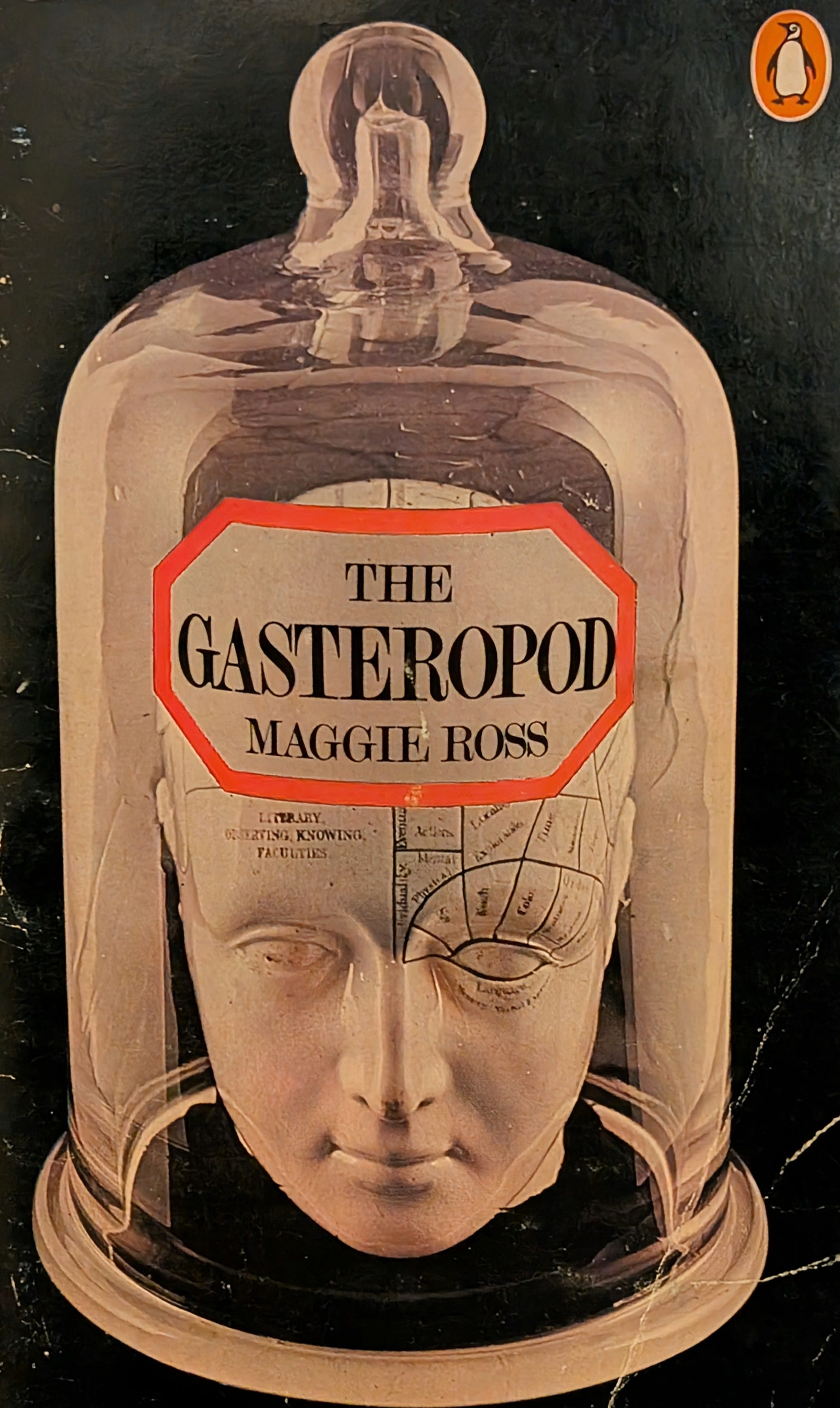
Not everyone, I suspect, will be wholly thrilled to hear that there is such a thing as a “technical approach” to book-collecting. For better or worse, though, that’s what the eminent John Carter once took as the subject of a short talk, duly broadcast on the BBC’s Third Programme in June 1950.
Don’t panic. Soon to become known as the author of the useful ABC for Book Collectors, Carter thought that collecting ought not to be some rarefied pursuit. Aside from the millionaires vying for indecently costly treasures, he clearly liked the idea of “shrewd and thoughtful people” assembling “very useful, enjoyable and valuable collections . . . for a very modest outlay”. Understanding what makes a first edition matters, of course, but there are other considerations at play.
What Carter was really trying to do with his talk – the third in a series of four talks that month on the subject of book-collecting – was to simplify matters. At least that’s how it seems to me. (It was published, also in 1950, by Bowes and Bowes, along with the three other talks by eminent chaps: R. W. Chapman, John Hayward and Michael Sadleir.) Carter argues that those hoping to understand what makes a book rare or recognize a first edition should not be put off by the minutiae – that would be what he calls the “technical fallacy”. (Is it a first edition of The Pickwick Papers you are after? Best to know, then, the 300 or so “points” by which such a book, “in the original nineteen serial parts”, may be identified. Come on, get counting!)
In an attempt to cut through the bibliographical jargon and elitist reputation, Carter advises that anyone wishing simply to collect books according to their “individual taste” should see esoteric book-knowledge in the context of a “reliable equation”:
The factors will be, a, what condition would be most congenial to my taste for a book of this date and character; b, what varieties of condition is it apt to turn up in; and, c, what am I prepared to pay? b over a modified by c equals the copy which will ultimately find a place on the shelf.
Factors a and c are down to individual taste and circumstance (assuming “condition” isn’t too perturbing a concept in itself). It’s only with factor b that some technical knowledge comes in.
It might be useful to know, for example, that a certain book published a century ago often turns up looking “shabby” but “really brilliant” copies are “as rare . . . as a hen’s tooth” – while another book of the same period “is of very uncommon occurrence in any condition”, with copies in their “presentable original state” being no harder to come by.
The first book Carter has in mind here is In Memoriam, “the superficially anonymous work of well-known poet . . . issued in a large edition by an established publisher”; among the many copies that were “much handled”, even the “purplish cloth” of those that weren’t has faded. The second book is the Rubáiyát of Omar Khayyám, “a thoroughly anonymous translation from an unknown Persian poet . . . printed in a very small edition from an antiquarian bookseller”. The Rubáiyát’s translation, Tennyson’s friend Edward FitzGerald, saw “many of the 250 copies” of his work “sold off from the sixpenny tray”, although there were a “few appreciative purchasers” who “treated their copies with respect”.
I’ve not exactly emulated Carter’s conscious clarity of purpose every time I’ve entered a bookshop. But I can say that I tend to scan the fiction shelves, among other sections, in the hope of finding something I’ve never seen before. Preferably something in a first edition, in near fine condition, wittily inscribed and/or annotated; I guess that’s factor a in his equation. When it comes to factor b, I’d prefer the proverbial moon on the proverbial stick, please. Contemplating factor c makes me feel uneasy and realize I shouldn’t have entered the bookshop in the first place.
In a further sign of insufficient seriousness, I’ve discovered that I don’t mind at all – in fact, I quite enjoy – finding out more about factor b retrospectively.
Pictured above, for instance: my Penguin paperback copy of The Gasteropod by Maggie Ross (purchased this week for 99p). This debut novel – adapted from a play Ross wrote called The Museum of Man – was first published in 1968 by Barrie and Rockliff: The Cresset Press. The narrator of the story is first encountered lying in wait for someone else he expects to arrive at the gallery; the chilling nature of the situation is revealed through a series of flashbacks. The novel won the James Tait Black Memorial Prize (between Margaret Drabble’s Jerusalem the Golden and Elizabeth Bowen’s Eva Trout) and received no small measure of acclaim: the Spectator called it a “masterpiece”, the TLS thought it “clever” and “brilliant”, and the Sunday Times got to the point by noting its “powerful erotic images”.
The Gasteropod hasn’t been reissued, an initial glance suggests, until – this month. Call it a classic case of a woman’s writing dropping out of sight, maybe? In any case, it dropped, all right – and imperfect though it might be in some ways, I don’t think it at all deserving of utter obscurity.
So it’s good to see Ross’s novel revived by Valancourt. If for no other reason, then for the sake of its disquieting drama and the curious tone established from the opening sentence: “I am standing in the portrait gallery looking at myself”.
“While still interested in all aspects of art, she looks forward to the time when its declassification will be complete.” So says the biographical note on Ross in the Penguin edition of The Gasteropod. An art teacher, poet, playwright etc, she published more over the years, including a contribution to Factions (Michael Joseph, 1974), an anthology of stories edited by Giles Gordon and Alex Hamilton, of which I already have a copy. Now, though, it seems that she has been largely forgotten. She doesn’t appear to be the Maggie Ross described on Wikipedia as a “vowed Anglican solitary” and former professor of theology (although at the time of writing Goodreads conflates the two by quoting as hers some of that other Ross’s theological writing). Are there Ross acolytes out there who know more about her?
My paperback of The Gasteropod isn’t in a terrible state internally, although the jacket is slightly creased and the spine has been embellished with a few infantile emblems. There should be more to say about its history (or even its future: it’s the sort of story I could imagine Peter Strickland adapting for the screen). But never mind factor b for now. One of these days, I’ll have to learn how to be more technically adept.
my two modes are finding a beloved author( barbara comyns orig hardbacks the white whale, only have one “out of the red into the blue” found in obscenely dusty canadian bookshop though was excited to find “the skin chairs” in a free box other day- the green V edition which is now just as rare- no one will republish bc of the weird name) and hoping to find a lost classic which i can then heroically help get republished which means i buy lots of flops in charity shops and its all a fantasy anyway considering skin chairs. Books i feel sorry for but resist buying: all those unreadable and more obscure sitwell men whose books have very funny titles. opened one other day which was completely incomprehensible, couldn’t even tell if novel, memoir, book of criticism. just a general impression of someone shouting in one of those old r rolling accents to a typist.